The upfront cost difference
For a typical 2,000 square foot home, you're looking at roughly $10,000 to $15,000 installed for architectural asphalt shingles. A standing seam metal roof on the same house runs $20,000 to $40,000, depending on the panel style, metal type, and your region.
That's a significant gap. But the upfront number is only part of the story.
| Factor | Asphalt Shingles | Metal Roofing |
|---|---|---|
| Installed cost (typical home) | $10,000–$15,000 | $20,000–$40,000 |
| Expected lifespan | 25–30 years | 40–70+ years |
| Maintenance frequency | Moderate | Low |
| Hail/wind resistance | Moderate | High |
| Noise in rain | Minimal | More noticeable |
| Resale premium | Standard | Moderate to high |
How long each lasts
Quality architectural asphalt shingles last 25 to 30 years with proper installation and basic maintenance. Budget shingles can start deteriorating after 15 to 20 years, especially in extreme climates. Standing seam metal roofs regularly last 50 years or more — some copper and zinc roofs have lasted over a century.
Over a 50-year period on the same house, asphalt might get replaced once. Possibly twice in a harsh climate. Metal doesn't.
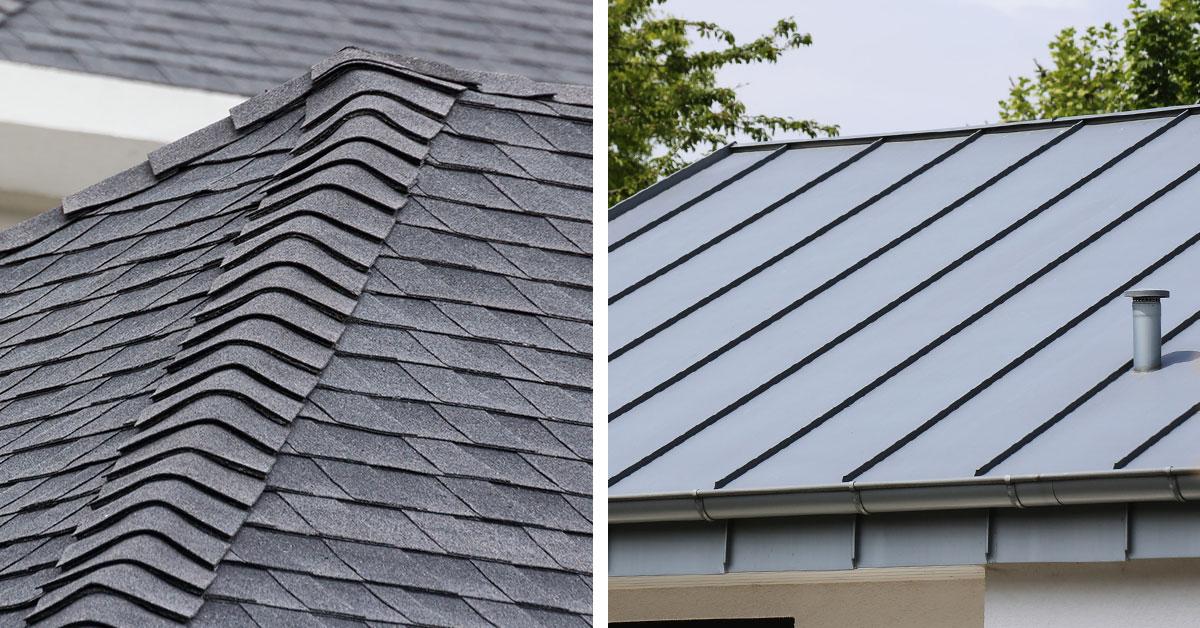
Asphalt remains the most common roofing material in North America. Metal has grown significantly over the past decade, particularly in regions with severe weather.
Running the real numbers
Take a 2,000 square foot home. Asphalt at $12,500 installed. If it needs replacing once in 50 years, that's $25,000 total (not accounting for inflation or price increases, which would make metal look even better). Metal at $28,000, not replaced in the same period.
The gap over time is much narrower than the upfront difference suggests. And metal often carries lower insurance premiums, better energy performance in hot climates, and adds more to resale value than asphalt — all of which chip away at that initial difference.
If you're planning to stay in the house for 20 years or less, the math typically favors asphalt. If you're planning to stay long-term or live in an area with frequent hail, heavy snow, or high winds, metal is worth the larger upfront investment.
Weather performance
Metal handles extreme weather significantly better. It's rated for high wind speeds, sheds snow faster than asphalt, and impact-resistant metal panels perform well in hail-prone regions. In hurricane zones, metal installed correctly outperforms almost every other material.
Asphalt has gotten better over the years. Class 4 impact-resistant shingles are a real improvement. But they still don't match properly installed metal on a 40-year performance basis.
The noise question
Rain on a metal roof is louder than on asphalt. That's a real thing. But modern metal installations typically include solid decking, an underlayment system, and sometimes insulation that dampens sound considerably. It's less dramatic than most people expect. Homeowners with metal roofs usually say they got used to it quickly, and some actually prefer the sound.
Resale value
Metal typically adds more to a home's resale value than asphalt, but how much depends heavily on your market. In storm-prone regions, buyers often pay a premium for a metal roof. In areas where asphalt is standard and buyers don't know the difference, the premium may be small.
Worth asking a local realtor if you're making this decision partly with resale in mind.
Who should choose which
Asphalt makes sense if you're budget-constrained right now, planning to sell within 15 years, or live in a moderate climate with predictable weather. It's reliable, widely supported by local contractors, and easy to repair if sections are damaged.
Metal makes sense if you plan to stay long-term, live in an area with severe weather, want the lowest-maintenance option, or are willing to pay more now to avoid dealing with roofing again for decades.
Both are valid. Neither is a mistake if chosen for the right reasons.