Move everything first
Go to the room where water is coming in and move anything that can be damaged. Electronics, furniture, rugs. If it's movable, move it away from the wet area. Then put towels or buckets down to catch the drip. This won't fix anything, but it limits how far the damage spreads while you work out the next steps.
Find where the water is actually entering
What you see on the ceiling is rarely where the water came in. Roofs leak at specific points and the water runs along the framing and shows up somewhere else entirely. Around flashing, at valleys where two roof planes meet, around pipe boots and skylight frames are the most common entry points.
If you can safely get into your attic, do it. Look for wet wood, water tracking along a rafter, or daylight visible through a gap. That's where the actual problem is, and it's useful information when you call a roofer.
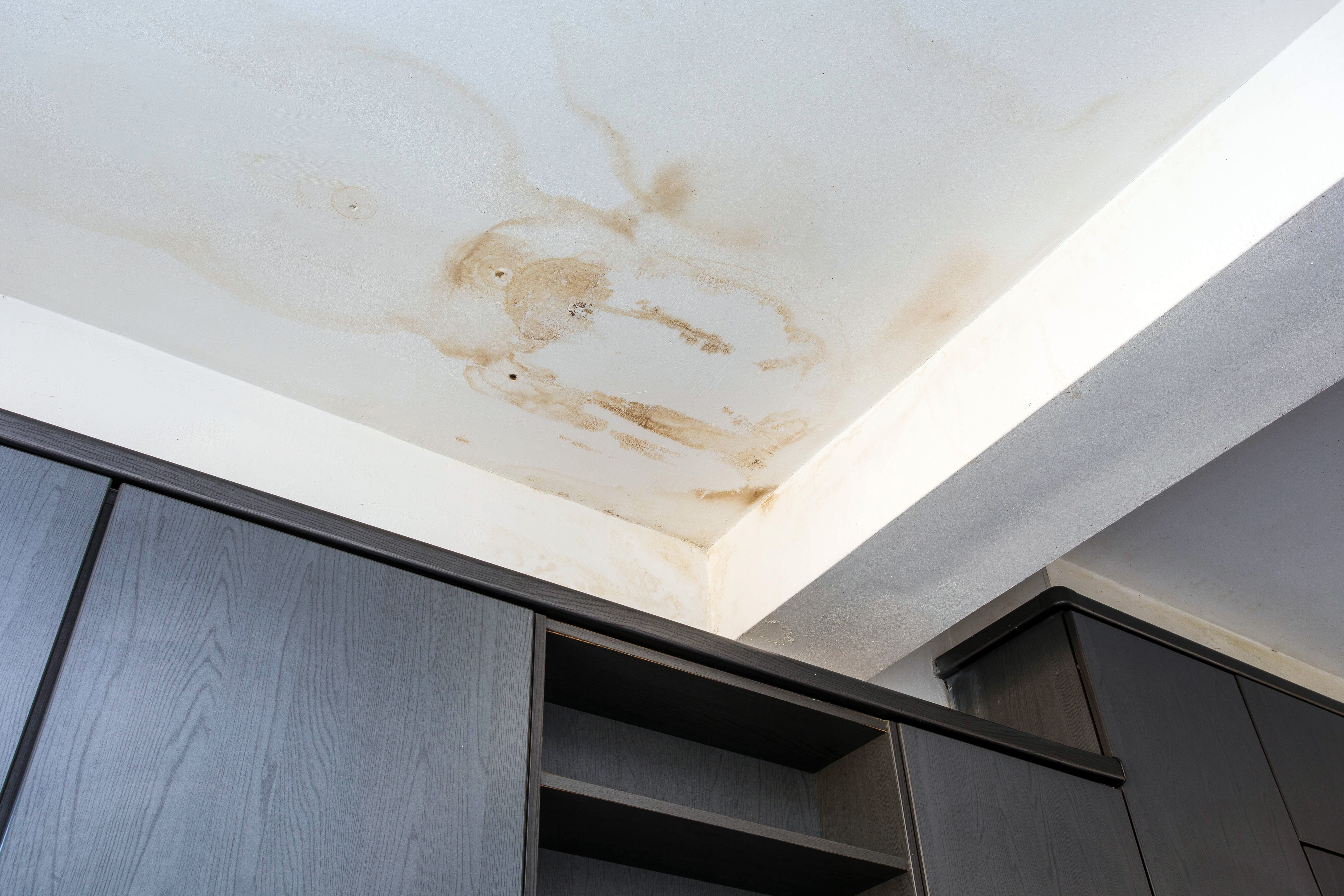
The water stain on the ceiling is usually not directly below the entry point. Water follows the framing before it finds somewhere to drip through.
Take photos before you do anything else to the damage
Before you move furniture or put buckets down, take photos. The wet ceiling. The water stain. The drip point. If you can get outside safely, photograph the roof from the ground. Your phone timestamps these automatically, which matters for any insurance claim. Don't skip this step even if you're in a hurry.
If you're planning to file an insurance claim, also document the weather conditions. A quick screenshot of a weather app showing the storm, or a note from a local weather service, helps establish that the damage was caused by a specific event rather than gradual wear.
Contain the water if it's dripping through the ceiling
If a section of your ceiling is visibly bulging with trapped water, poke a small hole in the center of it. This sounds counterintuitive, but a controlled drip point is better than the whole section collapsing under the weight. Put something to catch the water under the spot you pierce.
If the roof has stopped being hit by rain and you have safe access, a tarp over the damaged area will keep more water from coming in until a roofer can get there. See our guide on how to tarp your roof correctly before you go up.
Do not go on your roof while it is wet. A slip from a roof is a far worse problem than a leak. If the storm is still happening or the surface is wet, document from the ground and wait for dry conditions before going up.
Call a roofer the same day
An active leak needs attention fast. Water that reaches wood framing or insulation can lead to mold in 24 to 48 hours under warm conditions. Most roofing contractors offer emergency services. When you call, tell them where the leak appears to be coming from, when you first noticed it, and what the weather was like in the hours before it started.
Be specific. "There's a leak somewhere" gets you a generic response. "Water is coming in near the chimney flashing on the south side of the roof after last night's rain" gets you a faster, more useful conversation.
What to tell your insurance company
If the damage was caused by a sudden event like a storm, wind, or falling tree branch, it may be covered under your homeowners policy. Call your insurer the same day you notice the damage. Most policies require prompt reporting, and waiting can affect your claim.
Have your photos ready. Tell them the date it happened, what the weather was, and what you observed. Don't speculate about the cause beyond what you actually know. The adjuster will assess that separately.
What to have ready when you call: the date you noticed the leak, photos of the damage, a rough description of where it's located on the roof, and your policy number.
If a contractor has already assessed the damage, a written estimate from them is also useful to have when speaking with your insurer.
After the emergency is contained
Once the immediate problem is under control, have a contractor do a full inspection. What caused the active leak may be part of a larger issue. Flashing that's worked loose, shingles at end of life, or damage from a previous storm that was never addressed. You want to know what you're actually dealing with before you decide whether to repair or replace.