What homeowners insurance typically covers
Standard homeowners policies cover roof damage caused by events that are sudden and unexpected. The most common covered causes are wind, hail, falling trees or branches, fire, and lightning. If a storm rolls through and takes out a section of your roof, your insurer should cover the repair or replacement, minus your deductible.
The key word insurers use is "peril." If the damage was caused by a covered peril, you have a claim. If it wasn't, you don't.
What insurance does not cover
Gradual deterioration. Age-related wear. Moss and algae that weren't addressed over the years. Damage caused by poor installation. These are maintenance issues, and they fall on you, not your insurer.
This matters because a lot of roof damage looks like storm damage but is actually the result of deferred maintenance. An experienced adjuster will know the difference. If they determine the damage is age-related, the claim gets denied.
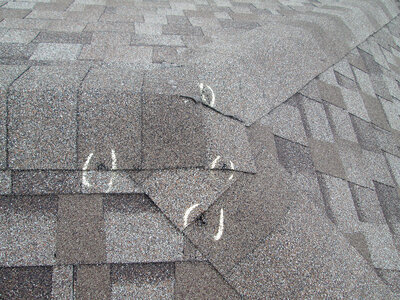
Hail damage shows as small circular dents or bruising on the shingle surface. Wind damage typically lifts and tears. An adjuster will assess each separately.
The age factor
This is where a lot of homeowners get surprised. Many insurance policies apply depreciation to older roofs. If your roof is 20 years old and gets hail damage, you may receive the Actual Cash Value of the roof rather than full Replacement Cost Value.
The difference can be enormous. A 20-year-old asphalt roof that costs $14,000 to replace might only have an Actual Cash Value of $4,000 to $6,000, depending on depreciation calculations.
Know which policy type you have. Replacement Cost Value pays what it actually costs to replace your roof today. Actual Cash Value pays replacement cost minus depreciation. The annual premium difference is modest. The claim difference can be tens of thousands of dollars. Check your policy now, before you need it.
How to document damage properly
Before you call your insurer, document everything. Take photos from every angle. If you can safely get up for a close look, do it. Date-stamp the photos if your camera doesn't do it automatically.
Write down the date the storm occurred, when you first noticed the damage, and what you observed. If there was a named weather event, note it. Check local news and weather records — those timestamps strengthen a claim.
Don't make repairs before the adjuster visits. A covered repair that goes undocumented is a missed reimbursement.
What to say to your adjuster
Stick to facts. This is when the damage occurred. This is what I observed. These are the photos. Point to specific damaged areas. Don't speculate about cause, don't minimize the damage, and don't exaggerate it either. Adjusters do this every day — they'll notice both.
It's helpful to have a roofing contractor present during the adjuster visit. A good contractor can identify damage the adjuster might miss, use the right technical language, and explain what's actually required to make a proper repair. Adjusters aren't always roofing experts.
If your claim gets denied or low-balled
You have options. First, get a detailed written estimate from a licensed roofing contractor that documents the full scope of damage. That estimate can serve as a second opinion and a basis for a re-evaluation.
Second, you can hire a public adjuster. They work independently of insurance companies and typically charge 10 to 15 percent of your settlement. For large claims, their expertise often results in a significantly higher payout that more than covers their fee.

Having a contractor present during the adjuster visit often leads to more thorough damage documentation.
Working with a roofer who handles insurance claims
Some roofing contractors specialize in insurance work and know exactly how to document, communicate, and support your claim. When you use Ralph to get matched, you can mention that insurance is involved and we'll make sure you're connected with someone who handles this regularly.
The most important thing you can do right now is read your policy. Know whether you have RCV or ACV coverage. Know your deductible. Know what perils are listed. That 20 minutes of reading could save you thousands if something happens.